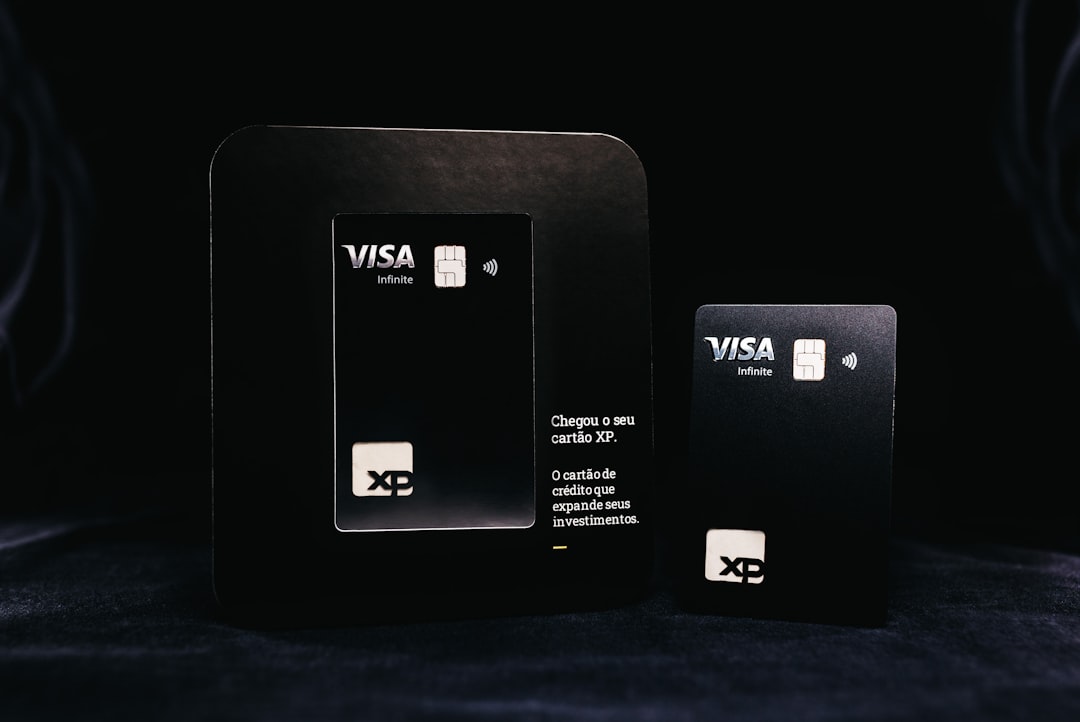
Cash Back Credit Cards: Maximizing Your Everyday Spending

Getting money back for purchases already planned makes cash back credit cards one of the simplest financial tools available. No points to decipher - no transfer partners to research. Just straightforward returns on everyday spending.
But but-not all cash back cards work the same way. Some reward everything equally - others boost specific categories. A few rotate their bonus structures quarterly. Picking the wrong card means leaving real money on the table.
How Cash Back Structures Actually Work
Three main models dominate the cash back market, each with distinct advantages depending on spending patterns.
Flat-rate cards offer the same percentage on every purchase. The Citi Double Cash, for example, returns 2% on everything-1% when buying, another 1% when paying the bill. Simple math - no category tracking required. These cards suit people who want zero mental overhead or whose spending doesn’t cluster in specific categories.
Tiered cards pay higher rates for designated categories. The Blue Cash Preferred from American Express delivers 6% at U. S. supermarkets (up to $6,000 annually), 6% on select streaming services, 3% at gas stations, and 1% elsewhere. Someone spending $500 monthly on groceries earns $360 yearly from that category alone.
Rotating category cards like the Chase Freedom Flex and Discover it Cash Back offer 5% on categories that change quarterly-think gas stations one quarter, restaurants the next. These require activation and category awareness but reward engaged cardholders generously.
A 2023 J - d. Power study found 41% of cardholders don’t fully understand their card’s reward structure. That misunderstanding costs the average household between $150-$300 annually in unrealized rewards.
Grocery Rewards: Where Most Households Win Big
The typical American family spends $475 monthly on groceries, according to Bureau of Labor Statistics data. At standard 1% cash back, that generates $57 yearly. Bump the rate to 6% with a card like the Blue Cash Preferred, and returns jump to $342-assuming spending stays under the $6,000 annual cap.
Several things complicate grocery rewards, though.
Warehouse clubs like Costco and Sam’s Club usually code as “wholesale clubs” rather than supermarkets. Same with Target and Walmart-their stores typically register as superstores, not groceries. The AmEx Blue Cash Preferred explicitly excludes these merchants from its 6% tier.
Workarounds exist. Buying grocery store gift cards at actual supermarkets captures the higher rate for later spending. Some cardholders purchase Visa or Mastercard gift cards at grocery stores, though issuers increasingly flag this behavior.
The Capital One SavorOne offers a different approach-3% at grocery stores without the annual cap. For households spending heavily at warehouse clubs that don’t code as supermarkets, the Costco Anywhere Visa provides 2% on Costco purchases specifically.
Gas Rewards and the Pump vs. Inside Distinction
Gas station rewards trip up many cardholders. Payments at the pump typically code correctly as fuel purchases. Walk inside to pay or buy snacks? That transaction might register as convenience store spending instead.
The PenFed Platinum Rewards Visa pays 5x points (effectively 4. 25% when redeemed as statement credit) on gas at any station. The Costco Anywhere Visa returns 4% on eligible gas purchases up to $7,000 annually. For context, driving 15,000 miles yearly at 25 mpg and $3. 50 per gallon means roughly $2,100 in gas spending-generating $84 annually at 4%.
Electric vehicle owners find less value here obviously. EV charging at home registers as utility spending; public charging stations code inconsistently across networks. Cards emphasizing traditional fuel categories provide diminishing returns as electrification accelerates.
The Annual Fee Question
No-annual-fee cards like the Chase Freedom Unlimited (1. 5% flat rate, 3% on dining/drugstores first year) eliminate the breakeven calculation entirely. Every dollar of cash back represents pure profit.
Cards charging annual fees require more scrutiny. The Blue Cash Preferred’s $95 annual fee makes sense when grocery spending exceeds $2,850 annually at supermarkets-the point where its 6% rate outperforms the no-fee Blue Cash Everyday’s 3%. Below that threshold, the math favors the free version.
Premium cash back cards remain relatively rare. The Alliant Cashback Visa Signature offers 2. 5% on everything with a $99 annual fee (waived with $1,000 monthly Alliant account deposits). Breaking even requires $3,960 in annual spending compared to a 2% no-fee alternative.
Redemption Matters More Than Expected
Cash back sounds straightforward until redemption minimums appear. Some cards require accumulating $25 before cashing out. Others impose statement credit thresholds.
The Discover it Cash Back allows redemption at any amount. PayPal Cashback Mastercard deposits rewards directly to PayPal balances with no minimums. Citi Double Cash provides options but previously required $25 minimums for direct deposit.
Redemption flexibility also affects value. A few cards offer bonus value when redeeming for specific purposes. The Bank of America Customized Cash Rewards provides up to 75% bonus on earned rewards for Preferred Rewards members, potentially turning 3% category earning into 5. 25% effective returns.
Building a Cash Back Strategy That Works
Most financial advisors suggest a two-card approach minimum: one strong flat-rate card as a baseline, plus one or two category specialists matching personal spending patterns.
Consider a practical example. Someone spending $800 monthly on groceries (at qualifying supermarkets), $200 on gas, $400 on dining, and $1,600 on everything else might use:
- Blue Cash Preferred for groceries: $576 annually (6% on $9,600)
- Citi Custom Cash for gas: $120 annually (5% on $2,400, assuming gas is top category)
- Capital One SavorOne for dining: $144 annually (3% on $4,800)
- Citi Double Cash for remaining: $384 annually (2% on $19,200)
Total: $1,224 yearly in cash back. Subtract the $95 Blue Cash Preferred fee, and net rewards equal $1,129.
Compare against using a single 2% flat-rate card on that same $36,000 annual spending: $720. The multi-card approach generates $409 more-roughly 57% better returns.
The tradeoff involves complexity. Tracking which card to use where takes effort. Juggling multiple payment due dates increases missed payment risk. Carrying too many cards can impact credit scores through average account age calculations.
Common Pitfalls That Erode Rewards
Carrying a balance destroys cash back value immediately. The average credit card interest rate exceeds 20% APR. Earning 2% while paying 22% creates negative returns. Full monthly payments remain non-negotiable for rewards optimization.
Foreign transaction fees catch travelers unprepared. Many cash back cards charge 3% on international purchases, eliminating rewards entirely. The Capital One Quicksilver and similar no-FTF cards avoid this problem.
Category caps limit earning potential on tiered cards. Hitting the Blue Cash Preferred’s $6,000 grocery limit by October means the final quarter earns just 1%. Tracking spending against caps-or switching cards when limits approach-maximizes returns.
Sign-up bonuses deserve attention too. The Chase Freedom Unlimited’s $200 bonus after $500 spending in three months effectively adds 40% return on that initial spending. New cardholders should factor bonus value into first-year comparisons.
The Verdict on Cash Back Cards
Cash back cards reward pragmatic spenders who prefer tangible returns over aspirational travel redemptions. They work best for:
- Households with predictable spending patterns
- People uninterested in complex point valuations
- Those who pay balances monthly without exception
- Spenders concentrating purchases in specific categories
The floor for cash back optimization sits at 1. 5-2% on general spending. Engaged cardholders targeting categories can push effective rates above 3% overall. At $40,000 annual credit card spending, that difference equals $400-600 yearly-real money for minimal ongoing effort.
Start by analyzing three months of transactions. Identify where money actually goes. Match those patterns to card earning structures. Then pick two or three cards that complement each other without creating unmanageable complexity.
The best cash back card isn’t universal. It’s the one aligned with how someone actually spends.