Bilt's New Cardless Lineup: Three Cards Reshaping Rent Rewards
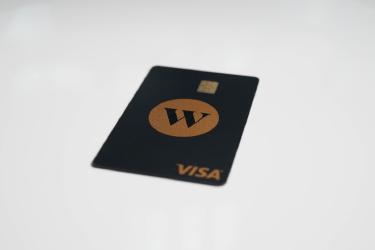
Bilt Rewards announced a partnership with Cardless in early 2026 that’s worth examining closely. The collaboration produced three distinct credit cards, each targeting different spending profiles while maintaining Bilt’s signature rent payment benefits. For renters who’ve watched their largest monthly expense generate zero rewards, this expansion offers new pathways to accumulate points.
The Partnership Structure
Cardless, the fintech platform that enables brands to launch co-branded credit cards without traditional banking infrastructure, now powers Bilt’s newest product line. The arrangement allows Bilt to diversify beyond its flagship Mastercard while maintaining integration with its existing points system.
The timing matters. Rent payments represent approximately $500 billion annually in the United States, according to RentCafe data. Most of that spend historically earned nothing for cardholders. Bilt pioneered the rent rewards category in 2021, and this Cardless partnership signals an aggressive push to capture more market share before competitors fully enter the space.
Breaking Down the Three New Cards
Bilt Everyday Visa
The entry-level offering carries no annual fee and targets renters who want simplicity. Cardholders earn 1X points on all purchases and the standard 1X on rent payments up to $50,000 annually. The card includes basic purchase protection and extended warranty coverage.
What distinguishes this from the original Bilt Mastercard? Fewer perks, lower barriers. There’s no minimum transaction requirement and no need to hit spending thresholds to keep the account active. For renters who pay $1,500 monthly and rarely use credit cards otherwise, the math works.
Bilt Dining & Entertainment Visa Signature
This mid-tier card carries a $95 annual fee and leans into lifestyle spending. The earning structure:
- 4X points at restaurants worldwide
- 3X on streaming services and entertainment subscriptions
- 2X on groceries
- 1X on rent and everything else
The entertainment category covers Netflix, Spotify, concert tickets through major platforms, and movie theater purchases. According to Bureau of Labor Statistics data, the average household spends roughly $3,500 annually on food away from home. At 4X earning, that’s 14,000 points yearly from dining alone-before counting rent.
Bilt Travel Visa Signature
The premium option costs $250 annually and competes directly with cards like Chase Sapphire Preferred. It offers:
- 5X on flights booked directly with airlines
- 4X on hotels and rental cars
- 2X on transit and rideshare
- 1X on rent and other purchases
Travel credits offset part of the annual fee: $100 toward airline incidentals and Global Entry/TSA PreCheck reimbursement. The card also provides trip delay insurance, lost luggage protection, and primary rental car coverage.
How Point Values Compare
Bilt points transfer to 15+ airline and hotel partners at 1:1 ratios. This includes American Airlines AAdvantage, United MileagePlus, Hyatt, and IHG. Transfer partnerships give Bilt points estimated values between 1. 5 and 2. 2 cents each, depending on redemption strategy.
The Bilt Travel Visa earning 5X on airfare could yield 10-11 cents per dollar spent when transferred to partners like Hyatt for aspirational redemptions. That’s competitive with American Express Membership Rewards at its peak utility.
But here’s a catch. Rent payments earn just 1X across all three new cards, same as the original Bilt Mastercard. The partnership didn’t change the fundamental economics of rent rewards-landlords and property management companies still don’t pay interchange fees high enough to support bonus earning on rent.
The Cardless Technology Advantage
Cardless operates differently than traditional card issuers. The company partners with banks (in this case, reportedly Evolve Bank & Trust) to handle regulatory requirements while providing the technology layer that enables rapid product launches.
For consumers, this means mobile-first account management and instant virtual card provisioning. Apply on your phone, get approved, and add the card to Apple Pay or Google Pay within minutes. Physical cards ship later, but digital-first users can start spending immediately.
Cardless also enables brands to iterate faster on card features. If Bilt wants to add a limited-time bonus category or adjust earning rates, the platform supports those changes without lengthy bank negotiations.
Who Should Consider Each Card
The Bilt Everyday Visa makes sense for renters prioritizing simplicity. If your rent is your primary credit card expense and you don’t want to improve categories, 1X on everything with no annual fee is straightforward. You’ll still accumulate meaningful points-$24,000 in annual rent generates 24,000 points, worth roughly $360-500 depending on redemption.
The Dining & Entertainment card fits urban renters with active social lives. A renter spending $2,000 monthly on rent, $400 on dining, and $100 on streaming and entertainment would earn approximately 45,600 points annually. After subtracting the $95 fee, effective value exceeds $550 at conservative point valuations.
The Travel Visa targets frequent flyers already spending heavily on airfare and hotels. Someone booking $5,000 in flights and $3,000 in hotels yearly, plus $24,000 in rent, would earn 61,000 points. The $250 fee, reduced to $150 after travel credits, pays for itself quickly.
Competitive Positioning
Bilt’s expansion arrives as competitors circle the rent rewards space. Visa and Mastercard have both indicated interest in helping rent payments at scale. PropTech companies like Stake and Till are testing alternative models. Large issuers could theoretically add rent payment capabilities to existing cards.
By locking in cardholders across three products with different fee structures, Bilt builds switching costs. A renter earning points on both rent and dining has more reasons to remain loyal than someone using Bilt solely for rent while carrying a separate dining card.
The strategy resembles what American Express accomplished with its card system. Different products for different customer segments, all feeding the same points currency.
Limitations Worth Noting
These cards inherit some existing Bilt constraints. Points are only redeemable through Bilt’s platform-you can’t cash out to statement credits like with some competing programs. Transfer partners are limited compared to programs like Chase Ultimate Rewards or Amex Membership Rewards, though the 1:1 ratios are genuinely excellent.
Rent payment processing still depends on landlord participation in the Bilt Alliance network or using Bilt’s own payment platform. Renters whose landlords require specific payment methods may find workarounds complicated or impossible.
And the $50,000 annual rent cap, while generous, does exclude renters in ultra-high-cost markets paying $5,000+ monthly. That’s a narrow segment, but it exists.
Application Considerations
Cardless-powered cards typically require good to excellent credit. Expect approval thresholds similar to other Visa Signature products-credit scores above 700 and established credit history. Bilt hasn’t published specific criteria, but early applicant reports suggest the Travel Visa is particularly selective.
Existing Bilt Mastercard holders can maintain their current card while adding one of the new products. Points pool into a single Bilt account regardless of which card earns them. This flexibility lets cardholders use different cards for different spending categories while maximizing total earning.
The Bottom Line
Bilt’s Cardless partnership represents a calculated bet that rent rewards can anchor a broader financial products system. The three new cards address obvious gaps-the original Mastercard left category spenders seeking better dining or travel earning rates without great options.
For renters already committed to Bilt, the expansion provides paths to accelerate point accumulation. For those evaluating whether to enter the Bilt system, the choice among four cards (including the original Mastercard) now accommodates more spending patterns.
The rent rewards space will likely see more competition over the next few years. But Bilt’s first-mover advantage, combined with this product expansion, positions the company to retain market leadership. Renters should evaluate their own spending to determine which card-if any-makes mathematical sense for their situation.