Bilt Rewards Launch: Three New Cards Reshape Rent Payment Market
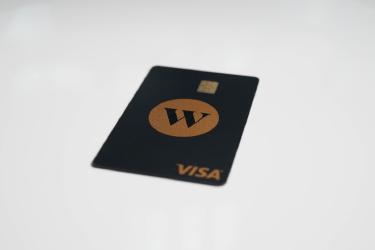
The rent payment area shifted dramatically in early 2025 when Bilt Rewards announced three new credit card products developed in partnership with Cardless. This expansion marks the most significant development in rent-focused rewards since Bilt’s original card launch in 2021.
For the roughly 44 million American households that rent their homes, earning rewards on what’s typically their largest monthly expense has long been either impossible or prohibitively expensive. Bilt changed that equation-and now they’re doubling down.
What Bilt Rewards Actually Offers
Bilt operates on a simple premise: renters shouldn’t be excluded from the credit card rewards system. The company partners with property management firms representing over 4. 5 million rental units across the United States, allowing residents to pay rent via credit card without the 2. 5-3% processing fees landlords typically pass on to tenants.
The original Bilt Mastercard, issued by Wells Fargo, earns 1x points on rent payments with no transaction fees. Points transfer to 15+ airline and hotel partners including American Airlines, United, Hyatt, and IHG. The card also earns 3x on dining, 2x on travel, and 1x on everything else.
But here’s the catch that frustrated many applicants: Wells Fargo’s underwriting standards proved conservative. Applicants with credit scores above 750 reported denials. The bank’s risk models apparently struggled with the unique profile of rent-focused card users.
Three New Cards Enter the Market
The Cardless partnership addresses this approval bottleneck while creating a tiered product lineup.
Bilt Rewards+ Card sits at the premium tier. Annual fee runs $195, with 2x points on rent payments up to $50,000 annually. That’s potentially 100,000 points per year from rent alone-worth roughly $1,700 when transferred to Hyatt. The card adds 4x on dining, 3x on travel, and includes a $100 annual travel credit plus complimentary Priority Pass lounge access.
Bilt Rewards Signature Card targets the middle market at $95 annually. Rent earns 1. 5x points, dining gets 3x, travel earns 2x. No dramatic perks, but the math works for renters paying $2,500+ monthly who prefer a lower annual fee.
Bilt Rewards Everyday Card carries no annual fee and matches the original card’s earn rates: 1x on rent, 3x dining, 2x travel, 1x everywhere else. The key difference is issuer-Cardless uses Cross River Bank, which reportedly applies different underwriting criteria than Wells Fargo.
All three cards share the same transfer partner network. Points pool in a single Bilt Rewards account regardless of which card earns them.
Cardless: The Technology Partner
Cardless launched in 2019 with a different vision for credit card issuance. Rather than banks creating their own products, Cardless provides the technology infrastructure for brands to offer co-branded cards with faster development cycles and more flexible approval algorithms.
The company’s existing portfolio includes cards for the Cleveland Cavaliers, Boston Red Sox, and Lollapalooza. Financial services represented a logical expansion.
Cross River Bank, a New Jersey-based institution specializing in fintech partnerships, handles the actual lending. Cross River already works with Affirm, Stripe, and Coinbase-companies that prioritize approving creditworthy applicants traditional banks might overlook.
Early data from the Cardless-issued Bilt cards suggests approval rates running 15-20 percentage points higher than the Wells Fargo product for applicants with scores between 680-720. Bilt hasn’t confirmed these figures officially.
How the Economics Actually Work
Skeptics have questioned Bilt’s business model since launch. Credit card issuers typically earn 1. 5-2% interchange fees on transactions. Rent payments generate closer to 0. 5% because landlords use commercial payment processing. Offering 1x points (worth roughly 1. 5 cents each when transferred optimally) seems mathematically challenging.
Bilt’s approach relies on several revenue streams:
Property management partnerships pay Bilt for resident engagement and retention data. When tenants pay rent through Bilt, property managers gain visibility into payment patterns and can offer targeted renewal incentives.
Non-rent spending generates standard interchange rates. Bilt’s 3x dining category encourages cardholders to consolidate spending on the card.
Transfer partner revenue sharing follows industry norms. Airlines and hotels pay credit card companies when points transfer-typically 0. 5-1 cent per point.
Rent reporting fees represent a newer income stream. Bilt reports on-time rent payments to credit bureaus. Some property managers pay for this service; some tenants pay $5/month if their landlord doesn’t participate.
The premium card tiers add annual fee revenue while attracting higher-spending customers likely to generate more interchange across all categories.
Competitive Response
Bilt’s expansion hasn’t gone unnoticed. Two significant competitors emerged in late 2024.
Stake offers a debit card that earns rewards on rent payments funded from linked checking accounts. No credit check required. The tradeoff: rewards rates run lower (roughly 0. 5%) and there’s no transfer partner network. Points redeem for statement credits or gift cards.
Piñata takes a different approach entirely. The app doesn’t require a specific payment method-it tracks rent payments made through any channel and awards points redeemable for gift cards and experiences. Earning rates are modest, but there’s zero friction.
Neither competitor matches Bilt’s transfer partner value. A Hyatt point from Bilt is worth 2+ cents; a Stake point redeems for 1 cent. For maximizers, the math isn’t close.
Traditional issuers have largely stayed away. Capital One tested a rent payment feature in 2023 but limited it to specific property management partnerships. American Express and Chase show no public interest in the category.
Who Should Consider Each Card
Bilt Rewards+ ($195/year) makes sense for renters paying $3,000+ monthly who travel frequently. The 2x rent earning rate plus travel credits offset the annual fee. Priority Pass access adds genuine value for road warriors.
Bilt Rewards Signature ($95/year) fits renters in the $2,000-3,000 monthly range who want better-than-basic earning without premium pricing. The card essentially pays for itself if you’d earn 6,333+ more points annually than the no-fee option-roughly $127/month in additional rent earning.
Bilt Rewards Everyday (no fee) works for cost-conscious renters who want transfer partner access without annual fee complexity. It’s also the logical starting point for applicants uncertain about approval odds.
The original Wells Fargo Bilt Mastercard remains available. Some applicants may prefer Wells Fargo’s broader branch network or existing banking relationship.
Application Strategy
Applicants with existing Wells Fargo denial letters report success with the Cardless-issued alternatives. Cross River Bank apparently weights income-to-rent ratio more heavily than traditional credit scoring factors.
Bilt allows holding multiple cards from their lineup simultaneously. Some users carry both the Wells Fargo and Cardless products, concentrating rent payments on whichever offers better promotional bonuses at the time.
Sign-up bonuses have been modest compared to traditional travel cards-typically 10,000-25,000 points with spending requirements. Bilt’s strategy prioritizes ongoing rent earning over one-time acquisition bonuses.
What This Means for Renters
The practical impact is straightforward: more renters now have access to meaningful rewards on their largest expense.
Consider a tenant paying $2,400 monthly in rent. With the Bilt Rewards+ card earning 2x, that’s 57,600 points annually from rent alone. Transferred to World of Hyatt, those points book 4-5 nights at Category 4 properties-hotels that often run $200-300/night.
The rent payment itself costs nothing extra. No processing fees - no portal surcharges. The landlord receives a check from Bilt as if the tenant paid by traditional methods.
Not every property participates in Bilt’s network. Tenants at non-partner properties can still pay rent through Bilt,. With restrictions: payments above $250 require the card to be used elsewhere at least 5 times monthly to avoid a $3 processing fee.
Looking Ahead
Bilt’s investor backing suggests continued expansion. The company raised $200 million in late 2024 at a $3. 25 billion valuation. That capital likely funds additional property partnerships and potential product extensions.
Mortgage rewards represent an obvious next frontier. Homeowners paying $3,000+ monthly on mortgages represent an even larger transaction volume than renters. Bilt has hinted at mortgage products without announcing specifics.
For now, the three-card Cardless lineup plus the original Wells Fargo product give renters genuine choice. Competition in rent rewards-essentially nonexistent three years ago-now offers options across credit profiles and spending patterns.
The message for renters is practical: if you’re paying rent anyway, you might as well earn something for it.