Biometric Payment Cards: Fingerprint Tech Stops Fraud
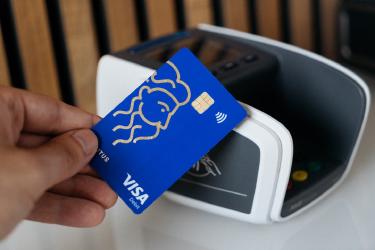
Somewhere between your wallet and your identity sits a small piece of plastic that criminals desperately want to compromise. Traditional payment cards rely on PINs and signatures-security measures designed decades ago. Biometric payment cards represent something different: authentication tied to who you are, not what you know.
Fingerprint-enabled payment cards embed a sensor directly into the card body, requiring the cardholder’s fingerprint to authorize transactions. No fingerprint match, no payment. The technology has moved from pilot programs to commercial deployment, with Mastercard, Visa, and regional issuers rolling out biometric cards across Europe, the Middle East, and Asia-Pacific markets.
How Fingerprint Authentication Works on Payment Cards
The biometric sensor sits in the upper corner of the card, typically measuring 12mm x 12mm. When a cardholder places their finger on the sensor during a transaction, the card captures a fingerprint image. Compares it against an encrypted template stored in the card’s secure element.
This comparison happens entirely on-card. The fingerprint template never leaves the card, never travels to a bank server, never gets stored in a central database. Fingerprint data stays with the cardholder-a critical distinction from smartphone biometrics or centralized identity systems.
Enrollment typically occurs at a bank branch or through a sleeve-based device sent to the cardholder’s home. The cardholder places their finger on the sensor multiple times while the card builds a reference template. Most cards allow enrollment of two fingerprints.
The matching process takes approximately one second. Upon successful authentication, the card behaves like any standard EMV chip card, communicating with the payment terminal through contact or contactless interfaces. Failed matches trigger a PIN fallback or transaction decline, depending on issuer configuration.
Fraud Prevention Capabilities and Limitations
Card-present fraud-unauthorized transactions made with a stolen physical card-accounts for roughly 28% of global card fraud according to Nilson Report data. Biometric cards directly target this category by making stolen cards useless without the owner’s fingerprint.
The math is straightforward. A four-digit PIN has 10,000 possible combinations. A determined criminal with a stolen card can attempt guesses or use shoulder-surfing tactics. Fingerprints offer approximately 1-in-50,000 false acceptance rates on card-embedded sensors, with no possibility of guessing.
But context matters here.
Biometric cards do nothing against card-not-present fraud-online transactions where physical card authentication doesn’t apply. CNP fraud represents roughly 72% of card fraud globally and continues growing as e-commerce expands. A biometric card provides zero additional protection when someone steals your card number and uses it for online purchases.
The technology also carries practical limitations. Wet fingers, cuts, and calluses can interfere with sensor readings. Cold weather affects sensor performance. Elderly cardholders with worn fingerprint ridges may experience higher rejection rates. Most implementations include PIN fallback options, which reintroduce the vulnerabilities biometrics aim to eliminate.
Cost Structure and Issuer Economics
Standard EMV chip cards cost issuers between $1. 50 and $3 - 00 per card. Biometric cards currently run $15 to $30 per unit at scale, though costs have dropped roughly 40% since 2020 as manufacturing volumes increased.
The business case depends on fraud exposure. Banks serving high-net-worth customers or operating in regions with elevated card-present fraud rates find the premium justifiable. For mass-market issuers in low-fraud markets, the economics remain challenging.
Thales, IDEMIA, and Fingerprint Cards AB dominate the supply chain. These companies provide the sensor modules, biometric algorithms, and card body manufacturing. Zwipe, a Norwegian firm, offers integration services connecting these components for regional card manufacturers.
Battery life represents another consideration. Unlike smartphone fingerprint sensors that draw power from the device battery, payment card sensors harvest energy from the payment terminal’s electromagnetic field during transactions. This works reliably for contactless payments but limits biometric authentication to terminal-powered scenarios.
Regional Adoption Patterns
Europe leads biometric card deployment. BNP Paribas launched biometric cards in France. NatWest piloted them in the UK. Crédit Agricole, Société Générale, and various Middle Eastern banks have active programs.
Asia-Pacific shows strong interest, particularly in markets with high contactless penetration. Singapore, South Korea, and Japan have seen pilot programs. India’s RBL Bank deployed biometric cards targeting premium customers.
North American adoption lags significantly. US issuers have shown limited enthusiasm, partly because card-present fraud rates are lower following the EMV migration, and partly because American consumers remain satisfied with existing authentication methods. JPMorgan Chase, Bank of America, and other major US issuers have not announced biometric card programs.
The pattern suggests biometric cards fill a specific niche rather than representing a universal upgrade. Markets with high contactless adoption, significant card-present fraud, and consumers willing to pay premium pricing see the strongest deployment.
Competitive Technologies and Future Trajectory
Biometric cards compete against several alternative authentication approaches:
Tokenized mobile payments (Apple Pay, Google Pay) offer device-level biometric authentication through smartphones. These systems have achieved broader adoption in many markets and provide similar fraud prevention for in-store purchases.
Behavioral biometrics analyze typing patterns, device handling, and transaction patterns to detect fraud without explicit authentication steps. This technology works across channels including CNP transactions.
Dynamic CVV cards display rotating security codes for online transactions, addressing the CNP fraud gap that biometric cards ignore.
3D Secure 2. 0 provides risk-based authentication for e-commerce, using device fingerprinting and behavioral signals to verify cardholders during online purchases.
The future likely involves layered approaches rather than single-technology solutions. A card might combine fingerprint authentication for physical transactions with dynamic CVV for online purchases and behavioral analysis for anomaly detection.
Mastercard has signaled plans to phase out manual card number entry for e-commerce by 2030, replacing it with tokenization and biometric authentication. This vision positions biometric cards as one component of a broader authentication system rather than a standalone solution.
Practical Considerations for Cardholders
For consumers evaluating biometric cards, several factors deserve attention.
Enrollment requirements vary by issuer. Some require branch visits; others provide home enrollment kits. The process typically takes 15-30 minutes and must be repeated if the card is replaced.
Fallback behavior matters when biometrics fail. Cards that default to PIN entry provide convenience but reduce security benefits. Cards that decline transactions without fingerprint match provide stronger protection but risk embarrassment at checkout.
Temperature sensitivity affects outdoor use. Contactless biometric authentication may fail in very cold conditions, requiring contact-based transactions with longer terminal interaction.
Replacement costs exceed standard cards. Cardholders who frequently damage or lose cards will pay premium replacement fees with biometric products.
The technology works as advertised for its intended purpose: preventing unauthorized use of stolen physical cards. Whether that specific threat justifies the cost and complexity depends on individual circumstances and risk exposure.
The Bottom Line on Biometric Cards
Fingerprint payment cards solve a real problem-card-present fraud-with proven technology. They don’t solve the larger problem of card-not-present fraud, which represents the majority of payment card losses.
Issuers deploy them strategically in high-risk segments and premium customer bases where the economics work. Mass-market adoption faces cost barriers and competition from mobile payment alternatives that offer similar authentication security.
For cardholders offered biometric options, the decision hinges on personal fraud exposure and willingness to manage the technology’s practical limitations. The cards work. Whether they’re worth the premium depends entirely on context.