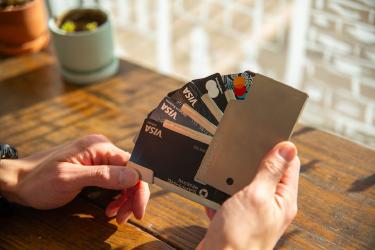
The Two Card Strategy: Maximize Rewards With Minimal Effort

Most people overthink credit card rewards. They sign up for five, six, even ten cards chasing every bonus category. Then they forget which card to use where, miss payments, and end up worse off than when they started.
There’s a simpler path. The two-card strategy offers 90% of the rewards potential with 10% of the complexity.
Why Two Cards Hit the Sweet Spot
Research from the Federal Reserve Bank of Boston found that American households hold an average of 3. 8 credit cards. But here’s what the data doesn’t show: most people use just one or two cards for most their spending. The rest sit in drawers, occasionally getting pulled out for specific purchases-if the cardholder remembers at all.
A 2023 study by J - d. Power revealed that cardholders who actively manage more than three rewards cards report 23% higher stress levels around their finances. Meanwhile, their actual rewards redemption rates were only marginally higher than two-card users.
The math makes sense when you break it down. A well-chosen pair of cards can cover:
- A flat-rate card earning 2% on everything
- A category card earning 3-5% on your highest spending areas
That combination captures most available rewards without requiring a spreadsheet to manage.
Building Your Two-Card Foundation
The foundation starts with selecting cards that complement rather than overlap. Think of it as a primary and secondary pairing.
The Flat-Rate Backbone
Every two-card setup needs a reliable baseline. Flat-rate cards earning 1 - 5% to 2. 5% on all purchases serve as the default option. When you’re uncertain which card to use, or when a purchase doesn’t fit a bonus category, the flat-rate card handles it.
Citi Double Cash remains a standard bearer here, offering effectively 2% back (1% when you buy, 1% when you pay). Wells Fargo Active Cash matches this with a simpler structure. The Fidelity Rewards Visa pushes to 2% when depositing to a Fidelity account.
No annual fees - no category tracking. No rotating calendars.
The Category Multiplier
The second card should target where your money actually goes. This requires honest self-assessment. Not where you think you spend or where you wish you spent. Where your bank statement shows the money flowing.
Common high-spend categories include:
- Dining and restaurants (3-4% cards widely available)
- Groceries (up to 6% on some cards, though often with annual fee)
- Gas stations (3-5% typical)
- Travel bookings (3x to 5x points common)
- Online shopping (various cards target Amazon, general e-commerce)
A household spending $800 monthly on groceries earns $576 annually with a 6% card versus $192 with a 2% flat-rate. That $384 difference can justify a $95 annual fee and still come out ahead.
Sample Pairings That Work
The No-Fee Minimalist
Citi Double Cash (2% everything) paired with Chase Freedom Flex (5% rotating categories, 3% dining/drugstores). Total annual fees: $0. This setup works for people who want rewards without commitment. The Freedom Flex quarterly categories require activation but no spending caps on the 5% rate.
The Grocery Maximizer
American Express Blue Cash Preferred (6% groceries, 6% streaming, 3% transit) with a 2% flat-rate backup. Annual fee: $95. Breaks even at roughly $158 monthly grocery spending compared to a no-fee 2% card. Most families clear this threshold easily.
The Dining Devotee
Capital One SavorOne (3% dining, entertainment, groceries, streaming) alongside Citi Double Cash. Annual fee: $0. The SavorOne’s broad 3% categories mean it becomes the primary card for discretionary spending while Citi handles bills and miscellaneous purchases.
The Points Collector
Chase Sapphire Preferred (3x dining, 2x travel) with Chase Freedom Unlimited (1. 5x everything, 3x dining, 5x travel booked through Chase). Annual fee: $95 total. Points pool together for 25% bonus when redeemed through Chase travel portal. This pairing suits travelers who value flexibility.
Making the System Stick
Knowing which cards to carry matters less than actually using them correctly. Behavioral economics research shows that complexity leads to decision fatigue, which leads to default behavior-usually pulling out whatever card sits at the front of the wallet.
Strategies that work:
Physical Positioning
Put the category card at the front of your wallet for daily use. Tuck the flat-rate card behind it. Physical friction changes behavior more reliably than mental reminders.
Automate Fixed Expenses
Assign recurring bills to whichever card offers better rewards for that merchant category. Utilities, subscriptions, and insurance payments often code as “other” and belong on the flat-rate card. But check-some cards offer bonus rates on streaming services or internet providers.
Monthly Two-Minute Review
Glance at both statements once monthly. Not to obsess over optimization, but to catch any missed payments and verify autopay worked. This habit also reveals spending patterns that might suggest swapping one card for another eventually.
When Two Cards Aren’t Enough
The two-card strategy isn’t universal gospel. Some situations genuinely benefit from additional cards:
- Business owners separating personal and business expenses
- Heavy travel spenders maximizing airline or hotel loyalty programs
- People with significant spending in multiple high-bonus categories
But even these cases rarely require more than three or four cards. The diminishing returns hit fast.
A cardholder earning $50,000 in rewards with a complex 10-card system might earn $42,000 with a simple two-card setup. Whether that extra $8,000 justifies tracking ten different payment dates, remembering category activations, and maintaining credit utilization across multiple accounts-that’s a personal calculation.
The Hidden Benefits of Simplicity
Beyond raw rewards dollars, the two-card approach offers advantages that don’t appear on comparison spreadsheets.
Credit Score Stability
Fewer accounts mean fewer hard inquiries over time and a higher average account age. Both factors influence credit scores. FICO data shows accounts older than seven years boost scores more significantly than newer accounts.
Fraud Detection
Monitoring two accounts for unauthorized charges takes less time than watching ten. Quicker detection means faster resolution.
Annual Fee Awareness
With two cards, you’ll notice when annual fees post. With eight cards, some inevitably slip through, charging $95 or $250 for benefits you forgot existed.
Relationship Benefits
High spend on fewer cards can unlock retention offers, credit limit increases, and upgrade opportunities. Banks notice their best customers. Spreading $3,000 monthly across six cards looks like occasional use on each. Concentrating it on two cards looks like loyalty worth rewarding.
Getting Started This Week
Pulling this off doesn’t require dramatic action. Start by answering two questions:
- What’s my single highest spending category outside of rent/mortgage? 2. Do I have a no-annual-fee flat-rate card earning at least 1. 5%?
If you lack a solid flat-rate option, apply for one. If your highest category lacks a dedicated card, research options there. Most approvals happen within minutes for those with good credit.
Then comes the hard part: putting unused cards in a drawer and resisting the urge to complicate things. The rewards come from consistent use, not from having the theoretically optimal card for every possible purchase.
Two cards - two payment dates to remember. Two apps to check. And very likely, 80% or more of the rewards you’d get from a wallet full of plastic.
Sometimes less really is more.